
How to Easily Explain Hearing aid TPAs to Patients
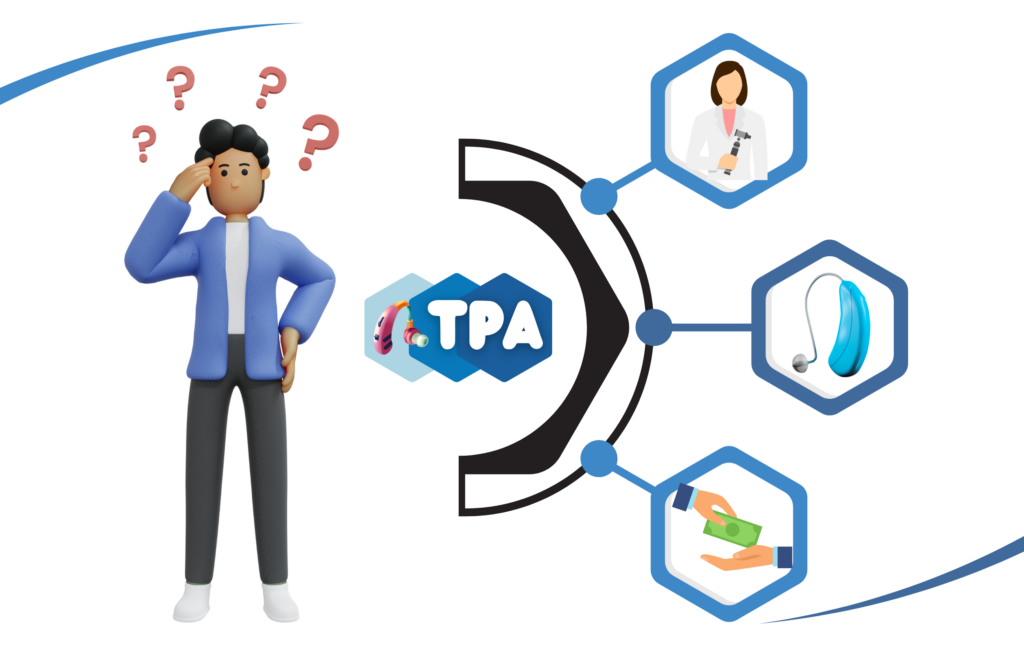
learning how to explain to a patient what a TPA is for hearing aids

Why Understanding Insurance, Benefits, and Provider Roles Matters

Third-party administrators (TPAs) have become a common part of today’s hearing aid benefits, especially within Medicare Advantage plans and hearing aid discount programs.

However, many patients do not realize their insurance company, hearing benefit administrator, and local hearing care provider may be three separate organizations with different responsibilities.

When those roles are not clearly explained, patients may assume their hearing care provider controls:

  • which hearing aids are covered
  • hearing aid pricing
  • insurance rules
  • available technology options
  • included follow-up services


In reality, these decisions are determined by the hearing benefit administrator managing the program.

It is important for patients to understand the insurer, TPA, and provider’s roles and responsibilities to make informed decisions about their hearing healthcare. This concept can be difficult to explain to staff, yet alone patients.

In this post, we will provide an analogy that most everyone is familiar with that will help patients to better understand how a TPA functions. 

Medicare Advantage, Hearing Aid Benefits, and TPAs

Most Medicare Advantage hearing aid benefits involve a third-party administrator.

These organizations may manage a covered hearing aid benefit or provide access to discounted hearing aid pricing.

Common hearing aid TPAs include organizations such as:

  • UnitedHealthcare Hearing
  • TruHearing
  • NationsHearing


A patient may believe: “My insurance covers hearing aids at this office.”

But the actual process may be: “My Medicare Advantage plan contracts with a hearing benefit administrator, who contracts with hearing care providers, manufacturers, and other partners to create the hearing aid program.”

That distinction matters.

The hearing care provider does not determine the benefit amount, available devices, pricing model, or required process.

Why Patients Become Frustrated

When a patient looks at their insurance card, the process may appear simple:

Providers know with most hearing aid “benefits” the process is not so straightforward because each organization has a different responsibility and the actual structure looks more like:

Insurance Company

Determines the health plan benefits and contracts with outside organizations.

Insurance CompanyThird-Party Administrator (TPA)

Manages the hearing aid program, which includes pricing, product options, provider networks, and follow-up care.

Hearing Care Provider

Performs the hearing evaluation, recommends appropriate technology, places the hearing aid order with the TPA, fits hearing aids, provides counseling, and delivers ongoing care within the parameters designated by the TPA.

When the different roles are unclear, patients often ask:

  • “Why won’t my insurance cover that hearing aid?”
  • “Why haven’t you refunded me yet?”
  • “Why do I have to pay for more visits?”
  • “Why are my options different from someone else with the same insurance company?”


You know the answer is that their TPA controls the hearing aid benefit with its own rules, pricing, product formulary, and requirements.

Do you explain that to the patient? If so, how?

Or

Do you immediately attempt to convince the patient why they should choose you over the TPA?

If so, are you unknowingly appearing “salesy”, deceptive, or defensive? After all, the TPA may have referred the patient to you or the patient independently scheduled the appointment with you because your clinic was listed as a participating provider.

Could that be seen as a sales tactic to get the patient in your door?

The provider’s job is to help patients understand their options and allow them the autonomy to make the best choice for their healthcare.

Explaining Hearing Aid TPAs to Patients Builds Trust

Explaining third-party administrators is not about discouraging patients from using their hearing aid benefits.

It is about transparency.

Patients deserve to understand:

  • who manages their benefit
  • who provides their care
  • what options are available
  • what services are included
  • what choices they have


The role of the hearing care provider is not simply to process a benefit or discount.

The provider’s role is to evaluate hearing needs, explain available options, and help each patient choose the solution that best supports their communication, lifestyle, and long-term hearing healthcare goals.

Think of Hearing Aid TPAs Like Expedia for Travel

Most patients have used Expedia, Hotels.com, or another online travel service.

A hearing aid TPA works in a similar way.

Booking a hotel through Expedia does not mean Expedia owns the hotel.

The hotel provides the room, but Expedia may determine:

  • available pricing
  • package options
  • reservation rules
  • cancellation policies


Booking through Expedia provides convenience and upfront savings, but may exclude continental breakfast, free parking, wifi access. or early check-in.


Hearing aid TPAs function similarly.


The hearing care provider delivers the professional care, but the TPA determines:

  • hearing aid options
  • pricing structure
  • service packages
  • ordering requirements
  • follow-up care rules


On the surface, hearing aid TPAs provide convenience and upfront savings, but patients should understand how the pathway works.

expedia analogy script

“Your insurance uses a hearing benefit partner program. It works similar to Expedia. The program manages certain parts of the process, and our role is to provide your hearing evaluation, recommendations, fitting, and ongoing care.

Before making a decision, we will review what options are available, what services are included, and what choices you have.”

Need an Easier Way to Explain Hearing Aid TPAs to Patients in Your Office?

Patients often become confused because they are trying to understand who manages their benefit, who provides their care, and what services are included.

We created a simple patient handout your team can use to explain the difference between:

✓ the insurance company
✓ the hearing benefit program
✓ the local hearing care provider

Using the Expedia Analogy

Common Patient Questions About Hearing Aid Benefits

These common questions can be answered by comparing the hearing aid benefit pathway to booking a hotel through Expedia.

1

“My insurance says I have hearing aid coverage. Why do I still have to pay?”

Expedia comparison

A discounted hotel rate through Expedia gives you access to specific pricing, but it does not necessarily mean the entire hotel stay is free.

How the hearing benefit works

Your hearing benefit may contribute toward the cost of certain hearing aids or provide access to negotiated prices. The amount you pay depends on the devices, technology levels, and services included in your particular program.

2

“Why can’t I use my benefit toward any hearing aid I want?”

Expedia comparison

When you book through Expedia, you can only select from the rooms and packages available through that platform. The hotel may offer other rooms or upgrades when booked directly.

How the hearing benefit works

The hearing benefit program determines which manufacturers, models, technology levels, and service packages are available through its pathway. Our clinic can explain those options, but we do not control the program’s product list.

3

“My friend has the same insurance company and received different hearing aids. Why?”

Expedia comparison

Two travelers may stay at the same hotel but have very different reservations. One may have booked through Expedia, another may have booked directly, and each may have selected a different package.

How the hearing benefit works

Having the same insurance company does not always mean having the same hearing aid benefit. Benefits may differ based on the specific plan, employer group, geographic area, benefit administrator, or enrollment year.

Your individual plan must be verified rather than compared with someone else’s benefit.

4

“Why are you charging me for another appointment? I thought follow-up care was included.”

Expedia comparison

Some hotel reservations include breakfast, parking, or other services. Others include only the room. The details depend on the package purchased.

How the hearing benefit works

Hearing aid programs also include different service packages. Some may include a limited number of follow-up visits or a defined service period.

Appointments outside those limits—or services unrelated to the hearing aids themselves—may require a separate fee.
5

“I paid your office. Why do I have to contact the hearing benefit company about my refund?”

Expedia comparison

A hotel may help with an Expedia reservation, but the booking platform still controls the reservation rules, transaction details, and refund process.

How the hearing benefit works

Depending on the program, our clinic may collect or transmit the payment, but the hearing benefit administrator may control the transaction, return authorization, cancellation rules, or refund timeline.

We can help explain which parts of the process our clinic manages and which must be handled by the benefit administrator.

6

“Why can’t you just change the price?”

Expedia comparison

A hotel cannot always change the price of a reservation purchased through Expedia because the rate and package were established through the booking platform.

How the hearing benefit works

Our clinic does not set the prices offered through your hearing benefit program. The program determines the patient price, provider payment, available products, and included services.

Our responsibility is to help you understand what is included and whether the option meets your needs.
7

“Why do I have to follow the hearing benefit company’s process when I am your patient?”

Expedia comparison

When you reserve a hotel through Expedia, you still stay at the hotel and receive service from the hotel staff. However, the reservation must follow Expedia’s booking procedures.

How the hearing benefit works

You are still our patient, and we remain responsible for providing appropriate hearing care.

When you choose to purchase through a hearing benefit program, the authorization, order, payment, return, and service processes must follow that program’s requirements.

The key distinction

The hearing care provider delivers the care. The hearing benefit administrator controls the program rules.

Final Takeaway: Clarity Creates Better Hearing Care Decisions

Hearing aid TPAs are now a common part of the hearing healthcare system.

The goal is not to tell patients which option they should choose. The goal is making sure they understand the pathway they are choosing.

When patients understand who manages their benefit, who provides their care, and what services are included, they can make confident decisions about their hearing healthcare.

Plan-Level Visibility Before the Appointment

Stop Guessing Which Hearing Aid TPA Manages the Patient’s Benefit

HearShield Pro helps your team identify TPA involvement, benefit structure, copay ranges, and frequency limitations before the patient arrives.

🔎
Identify TPA Involvement
💵
See Benefit and Copay Details
Guide the Next Step Clearly
Start Your Free Trial →

Start with a free trial. After the trial, HearShield Pro is $249 per month.
Cancel anytime. No long-term commitment.

HearShield Pro provides plan-level Medicare Advantage hearing aid benefit information. It is not insurance verification and does not confirm live eligibility, authorization, or claim-level coverage.

image depicting 2 patient pathways for appointment- hearing aid or diagnostic

Why Verifying Hearing Aid Benefits Too Early Can Create Workflow Problems

Medicare Advantage hearing benefits have created new challenges for audiology practices. A patient who contacts your clinic for a hearing evaluation may require a different workflow than a patient referred through a third-party administrator (TPA). Learn why verifying the right benefit at the right time helps protect diagnostic billing, documentation, and patient expectations.

Read More »
learning how to explain to a patient what a TPA is for hearing aids

Easily Explain Hearing Aid TPAs to Patients

Confusion around hearing aid TPAs can lead to frustrated patients, unclear expectations, and difficult conversations. Learn how to explain the relationship between insurance companies, third-party administrators, and hearing care providers while building trust through transparency.

Read More »