





THE MEDICARE ADVANTAGE INTENDED FOR TPAs AND HEARING AID BENEFITS
What IS THE INTENDED ROLE OF A TPA'S administration of HEARING AID BENEFITS?
If you’re reading this, you likely already know what a third-party administrator in hearing care is—and I can hear your sigh from here.
But what is the TPA’s “intended” role in hearing aid benefits? Is it something more than a person on the phone reading a script or an annually updated guide telling you (and every other provider in the U.S.) which services to provide, what your patient will pay, which devices are “allowed,” how much you’ll be paid per device, and what you’re permitted to charge the patient?
They’ve already decided the monetary value of your time—regardless of your education, experience, market, and overhead.
Before we dive into the TPA’s “intended” role, it is important to know how the TPA came to be. As with any villain, there is of course an origin story.
Medicare advantage and TPA: The origin story
Before those soul-crushing words—“benefits only available through a TPA”—here’s how we arrived to that dead-end.
Medicare Advantage was created by the Balanced Budget Act of 1997. The initial intent was to reduce the overall financial strain on the Medicare system by encouraging enrollment in private plans that could manage care more effectively. Hindsight is 20/20.
Since then it’s exploded to about 33–34 million people (≈54–55% of beneficiaries) in 2024.
Medicare eligible beneficiaries have 2 options for Medicare coverage:
Traditional Medicare and add:
- Medicare approved supplemental policy
- Medicare Part D prescription plan
Medicare Part C- A CMS approved Medicare Advantage plan that must include:
- Medicare Part A
- Medicare Part B
- Medicare Part D (RX coverage)
Medicare "disadvantage"
Here’s the kicker: Medicare lets commercial insurers build these Part C products so long as they meet minimum standards, and then pays them a risk-adjusted, capitated amount per member to manage care.
That per-member check creates a crystal-clear incentive to grow enrollment, which is why you see “$0 premium,” “$0 copay,” or “hearing, dental, vision included” splashed across the ads.
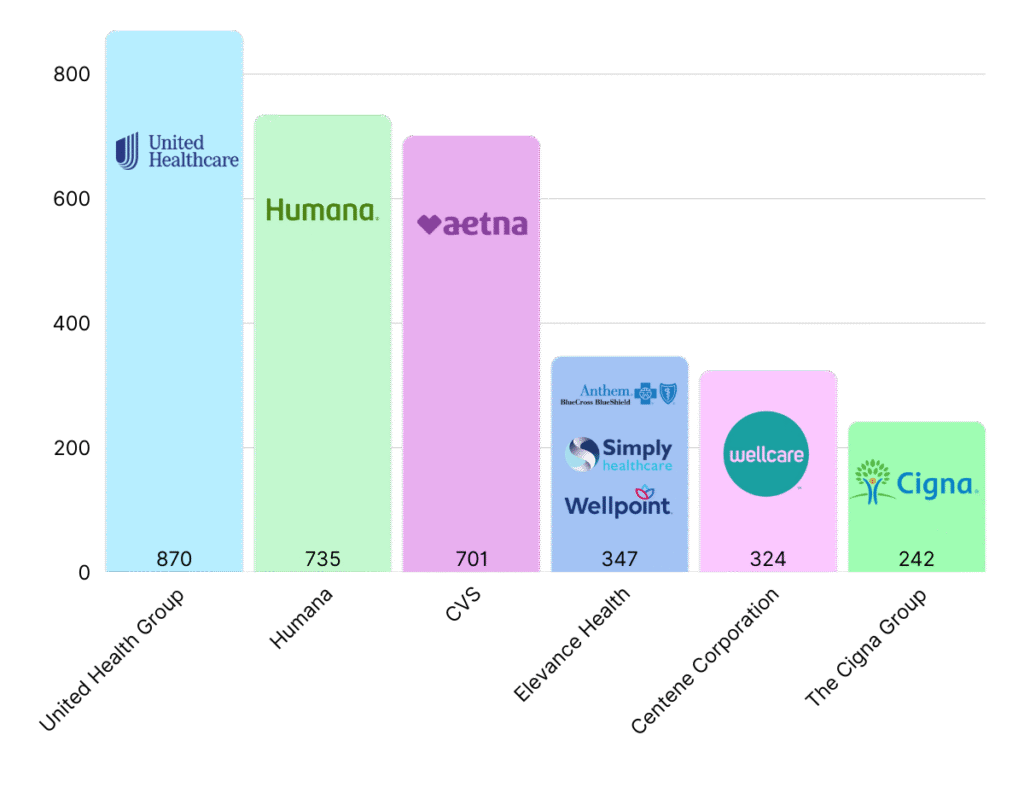
known associates: The big Six by contract count
Contract count, not membership—each contract can have its own vendor/TPA and benefit design. This does not include Group Medicare Advantage plans.
Why this matters: Most Medicare Advantage contracts sit inside just a handful of companies. Each bar isn’t “members,” it’s the number of distinct MA contracts those insurers hold—each with its own rules, networks, and fine print.
At this scale, plans don’t hand-craft hearing benefits; they standardize and delegate. That’s how you end up with script-driven portals, fixed device menus, and the familiar line: “benefits only available through a TPA.”
In practice, your front desk isn’t dealing with one benefit—it’s dealing with hundreds of contract variations funneled through a few TPAs, which explains why five patients with the same insurer can still have five different paths.
Why Medicare Advantage Plans use TPAs
A third-party administrator in hearing care solves several problems for Medicare Advantage (MA) plans that operate on fixed, risk-adjusted, per-member payments. Building a national hearing program in-house is messy; delegating to a specialist is tidy.
The plan’s incentives:
Capitated math: Plans get a set payment per member. Hearing is a volatile, high-ticket line item; TPAs turn that into predictable unit costs (fixed device tiers + fitting fees).
National footprint, fast: A few vendors can stand up 50-state networks overnight—credentialing, scheduling, returns, warranties, the whole call-center stack.
One formulary to rule them all: TPAs negotiate manufacturer pricing and lock in tiered formularies that are easy for actuaries to price and easy for call centers to read from a script.
Compliance box checked: Under delegation, the TPA agrees to MA FDR–style training, auditing, and reporting—giving plans artifacts for CMS oversight without staffing it internally.
FWA controls: Centralized rules (eligibility checks, trial windows, loss/theft rules) give plans a cleaner paper trail for fraud, waste, and abuse monitoring.
Member marketing made simple: It’s easier to advertise “$0 copay” or “hearing included” when a vendor has already packaged SKUs, allowances, and follow-ups.
what advantage do tpas have?
Scale and SKU complexity: Hundreds of models, accessories, molds, firmware updates, and returns are hard to manage inside a medical plan; TPAs already live in that complexity.
Procurement leverage: Vendor-run programs pool volume across many plans, extracting better manufacturer pricing than a single plan could alone.
Operational plumbing: Prior auth rules, benefit portals, device fulfillment, shipping, repairs, remake logistics—TPAs arrive with this plumbing ready-made.
What the TPA promises a medicare advantage plan
Standardized member journey (schedule → eval → fit → trial → keep/return).
Standardized costs (device tier + fixed fitting fee).
Standardized reporting (utilization, returns, satisfaction, complaint logs).
what does this mean for audiology
When plans chase predictable costs and consistent reporting, TPAs respond with formulary control, visit caps, and scripted pathways. That’s why you keep hearing the line: “benefits only available through a TPA.”
Quick takeaways
Now you know the role the TPAs were meant to play in hearing aid benefits
A TPA exists because MA plans want predictable unit costs, national scale, and one playbook for devices and follow-ups.
That playbook shows up in clinic life as formulary control, visit caps, and scripted pathways—hence, “benefits only available through a TPA.”
Your patients see “HEARING AID BENEFITS” on the ad; you feel the fitting-fee model and the fine print.
📌 What’s next in the series
In Part 2: The Illusion of Choice Manufacturer-Owned TPAs we’ll quantify the landscape:
- the actual impact of TPA contracts on your practice
-
which TPAs administer the most CMS MA contracts
-
how contract concentration (remember the six insurers holding 62% of contracts) shapes benefit design
Check out how Hear Shield PRO helps you take back control of your practice!
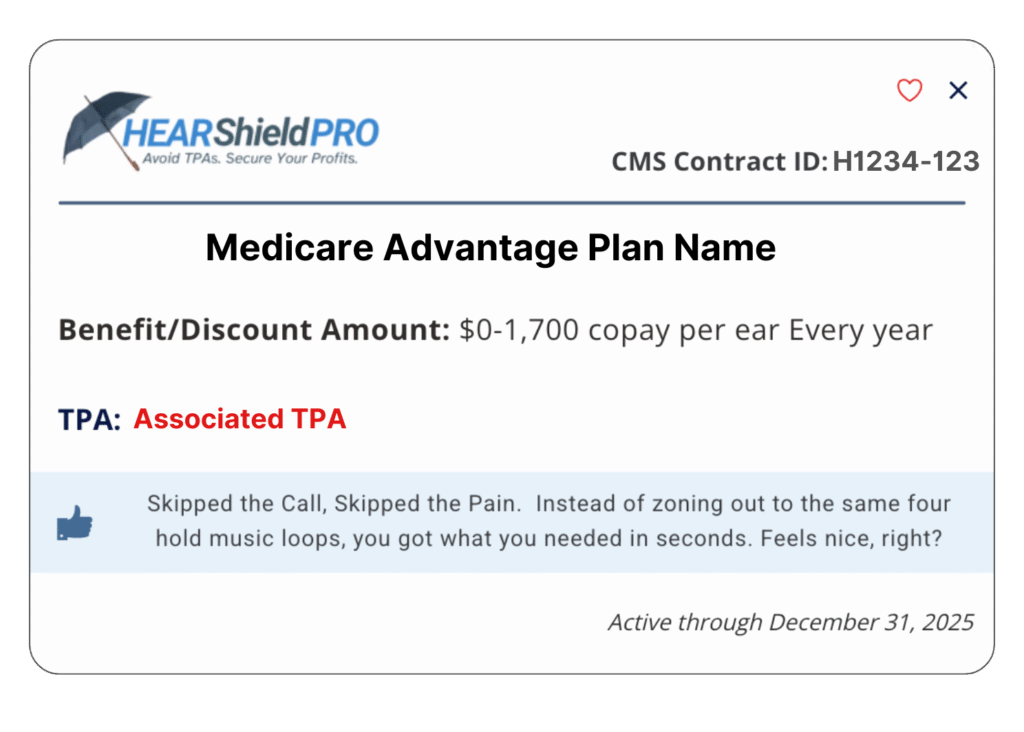
With Hear Shield Pro, you’ll know upfront whether a plan requires TPA involvement Medicare Advantage Hearing Aid Benefit Lookup Tool — and can safeguard your revenue before scheduling or ordering.
Begin your free trial today and protect your clinic.

3 Mistakes to Avoid When Switching Audiology OMS Platforms
Switching audiology software isn’t the hard part—getting it to actually work is. Learn the 3 most common mistakes practices make when transitioning OMS platforms and how to avoid workflow breakdowns, billing issues, and missed revenue.

The Script Just Flipped: Amplifon Buys Resound
Facebook Twitter LinkedIn For more than a decade, the hearing industry has been moving in one direction: manufacturers acquiring distribution networks. By purchasing retail chains,

Can Audiology OMS Setup Eliminate TPAs?
Is your Audiology Office Management System (OMS) holding your practice back? The right setup can transform data into actionable insights, empowering strategic decisions that enhance patient care and protect revenue. A well-structured OMS can uncover opportunities, streamline operations, and improve efficiency. Don’t let a generic setup dictate your clinic’s future. Learn to build an OMS that aligns with your goals, ensuring success in a competitive landscape.