Audiology Workflow Design
Most practices don’t have a software problem.
They have a systems problem.
We design and configure audiology workflows inside your existing systems—so Medicare Advantage variability, documentation, billing, and team execution are aligned from the start.
Not new software. Not generic consulting.
We structure how your practice actually operates.
We’ll review your workflow, payer mix, and where revenue may be leaking.
Why Audiology Workflows Break Down
Most audiology practices don’t have a technology problem—they have a workflow problem.
Systems are layered on over time, processes evolve informally, and no one steps back to evaluate how everything actually works together. The result is a fragmented operation where small inefficiencies compound into missed revenue, inconsistent patient experiences, and unnecessary reliance on third-party administrators.
Medicare Advantage Introduces Variability
Medicare Advantage plans are not standardized. Each plan can differ in:
- hearing aid benefits
- copay structures
- frequency limitations
- TPA involvement
Without a clear process to identify these variables before the visit, practices are forced into reactive workflows—often triggering TPA pathways unintentionally or navigating benefit confusion in real time with the patient.
OMS Systems Are Not Configured to Support Real Workflows
Most office management systems are implemented around features—not workflows.
Scheduling, documentation, invoicing, and device tracking exist, but they are rarely configured to reflect how a patient actually moves through your practice. Staff adapt to the software instead of the software supporting the workflow.
This leads to:
- multiple ways to complete the same task
- inconsistent data entry
- underutilized system capabilities
Billing and Documentation Are Disconnected
Clinical documentation and billing logic often operate in separate lanes.
Without alignment between:
- what is documented
- what is billed
- what payers expect
Practices experience:
- claim denials
- missed charges
- unclear patient responsibility
This disconnect becomes even more pronounced when Medicare Advantage and unbundled service models are involved.
Staff Execution Becomes Inconsistent
When workflows are not clearly defined and systems are not configured to support them, execution becomes dependent on the individual.
Different team members:
- verify insurance differently
- document visits inconsistently
- communicate benefits in varying ways
Over time, this creates operational drift—where outcomes vary not because of strategy, but because of inconsistency.
The Result: Fragmentation That Impacts Revenue
These breakdowns don’t happen in isolation.
They compound into:
- avoidable TPA referrals
- delayed or incorrect billing
- inconsistent patient communication
- revenue leakage across the patient journey
Most practices don’t need more tools. They need structure, alignment, and workflows designed to support how the business actually operates.
How We Design Audiology Practice Systems
We don’t replace your systems—we design how they work together.
Most practices already have the tools they need. What’s missing is structure: how patients move through the practice, how decisions are made, and how each step connects to documentation, billing, and revenue.
Our approach focuses on building a repeatable, system-driven workflow inside your existing environment.
1. Workflow Mapping
We start by mapping your current patient journey from:
- scheduling
- intake
- verification
- evaluation
- treatment
- billing
This identifies:
- where breakdowns occur
- where variability is introduced
- where revenue is lost
The goal is to make the workflow visible, measurable, and consistent.
2. System Configuration (OMS / Suno / CounselEAR)
Once the workflow is defined, we configure your existing systems to support it.
This includes:
- appointment types aligned with visit intent
- structured documentation templates
- consistent data entry pathways
- task automation where appropriate
Instead of staff adapting to the software, the system is configured to support how your practice actually operates.
3. CPT + Billing Alignment
Workflow design must align with how services are billed.
We ensure that:
- documentation supports the correct CPT codes
- visit structure reflects payer expectations
- charges are consistently captured
This reduces missed revenue, claim denials, and billing ambiguity.
4. Insurance Verification Integration
Insurance verification is not a front-desk task—it’s a workflow driver.
We integrate verification into the patient journey so that:
- Medicare Advantage plan details are identified early
- TPA involvement is understood before the visit
- patient conversations are aligned with actual benefits
This prevents reactive decision-making and reduces unnecessary TPA routing.
5. Revenue Monitoring + Feedback Loops
Once the system is in place, we establish simple feedback loops to monitor performance.
This includes:
- tracking key workflow checkpoints
- identifying breakdown patterns
- refining processes over time
The result is a system that doesn’t just function—it improves continuously.
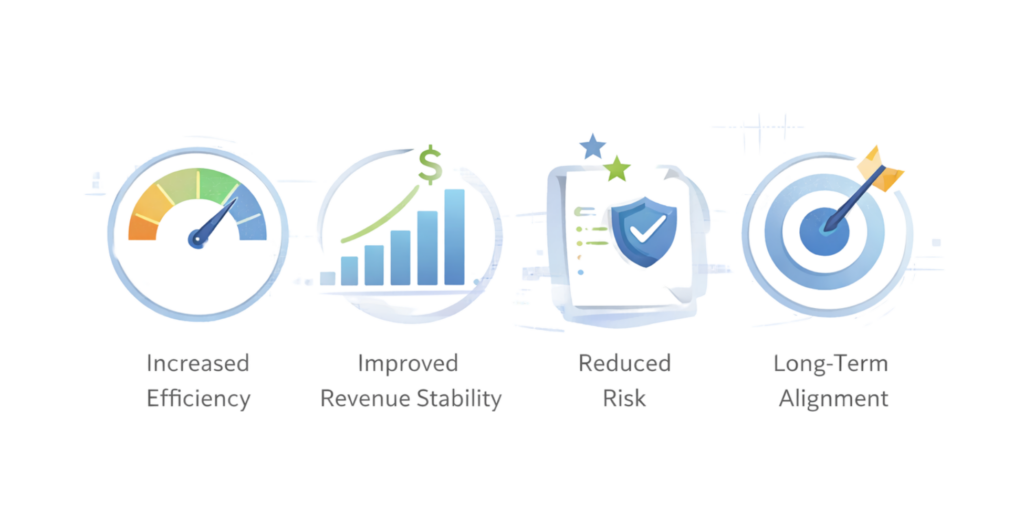
The Outcome: A System That Executes Consistently
When workflows are clearly defined and systems are configured to support them:
- staff execute consistently
- patient conversations become more confident
- billing aligns with documentation
- revenue becomes more predictable
What We Help Audiology Practices Design
HearShield Pro is not a generic consulting service and not a replacement for your software.
We help independent audiology practices design the systems that connect workflow, documentation, verification, billing, and revenue logic. Each area below can stand alone, but the real value comes from how they work together.
1. Workflow Design
We map how patients move through your practice—from scheduling and intake to testing, treatment, and follow-up—so each step is clear, repeatable, and operationally aligned.
This includes:
- patient journey mapping
- appointment flow design
- handoff clarity between team members
- reducing inconsistency across visits
Outcome: a workflow that supports execution instead of relying on memory, workarounds, or individual habits.
2. Insurance Verification & Medicare Advantage Workflow
We help practices build a verification process that supports better decisions before the visit begins—especially when Medicare Advantage variability and TPA involvement create risk.
This includes:
- Medicare Advantage workflow design
- benefit clarity before the appointment
- TPA risk identification
- patient conversation alignment based on actual plan structure
Outcome: fewer reactive decisions, fewer avoidable TPA pathways, and more confident front-end execution.
3. CPT, Billing & Documentation Alignment
We design systems that connect what happens in the visit to what gets documented, billed, and supported downstream.
This includes:
- CPT-aligned workflow structure
- documentation-to-billing logic
- charge capture consistency
- reducing disconnect between clinical activity and revenue
Outcome: cleaner billing processes, reduced ambiguity, and stronger alignment between services performed and services captured.
4. OMS Configuration & Operational Setup
Most practice management systems have the necessary features, but they are rarely configured to support real-world workflows. We help shape the operational layer inside the system you already use.
This includes:
- appointment type structure
- template and form strategy
- task and process configuration
- system setup that reflects actual visit intent and team workflow
Outcome: software that supports the practice, instead of the practice constantly adapting to the software.
5. Revenue Logic & Operational Performance
Workflow decisions have financial consequences. We help practices evaluate how payer mix, plan design, pricing structure, and operational breakdowns affect revenue over time.
This includes:
- identifying revenue leakage points
- evaluating workflow-driven financial strain
- aligning operations with more predictable revenue capture
- creating feedback loops for performance refinement
Outcome: a more stable operating system with clearer visibility into where revenue is being protected—or lost.
These are not isolated services. They are connected parts of the same operating system. When workflow, verification, documentation, billing, and revenue logic are designed together, practices gain more than efficiency—they gain clarity, consistency, and control.
Request a Strategy Call
If your practice feels operationally strained or structurally fragile, this focused assessment will clarify where systems are breaking down — and what a stable path forward looks like.

Why Verifying Hearing Aid Benefits Too Early Can Create Workflow Problems
Medicare Advantage hearing benefits have created new challenges for audiology practices. A patient who contacts your clinic for a hearing evaluation may require a different workflow than a patient referred through a third-party administrator (TPA). Learn why verifying the right benefit at the right time helps protect diagnostic billing, documentation, and patient expectations.
Easily Explain Hearing Aid TPAs to Patients
Confusion around hearing aid TPAs can lead to frustrated patients, unclear expectations, and difficult conversations. Learn how to explain the relationship between insurance companies, third-party administrators, and hearing care providers while building trust through transparency.
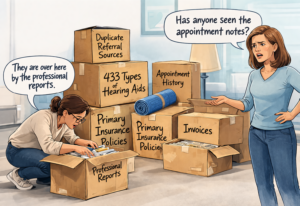
3 Mistakes to Avoid When Switching Audiology OMS Platforms
Switching audiology software isn’t the hard part—getting it to actually work is. Learn the 3 most common mistakes practices make when transitioning OMS platforms and how to avoid workflow breakdowns, billing issues, and missed revenue.