






Male reading 2026 Medicare advantage evidence of coverage document for hearing aid benefits
Facebook
Twitter
LinkedIn

Evidence of Coverage Documents Are Contracts, Not Explanations

It is important to start here.

An Evidence of Coverage is:

  • A CMS-regulated document
  • A legally binding contract between the plan and the member
  • Reviewed by compliance and legal teams
  • Written to be enforceable, not intuitive

That means language choices are not accidental.

When a plan uses a phrase like “approved vendor” instead of naming a company, or “must contact the hearing vendor” instead of listing a network, that choice serves a purpose. It preserves flexibility for the plan while still binding providers and members to a specific pathway.

Understanding this changes how you read the document. The question stops being:

“What does this benefit say?” And becomes: “What does this language require me to do?”

The Shift Toward Delegated Hearing Benefits

Most Medicare Advantage plans no longer administer hearing aid benefits directly. Instead, they delegate them to a hearing-specific administrator, commonly referred to as a TPA.

That administrator typically controls:

  • Which providers are eligible
  • Which hearing aids are allowed
  • How the benefit is accessed
  • How services are bundled
  • How and when payment occurs


What varies in 2026 is how transparently that delegation is disclosed in the EOC.

After reviewing multiple 2026 EOCs across carriers, three distinct language patterns consistently appear.

How Hearing Aid Benefit Evidence of Coverage Language Actually Works in 2026

When you strip away phrasing differences, Medicare Advantage hearing aid benefits fall into three operational categories.

Only one of them offers real flexibility. The other two route access through a third-party administrator (TPA), whether the plan admits it or not.

Understanding which category a plan uses is far more important than memorizing benefit amounts.

Category 1: Benefit Available In-Network or Out-of-Network

(True flexibility — increasingly rare)

In this structure, the plan does not require the member or provider to go through a specific hearing program to access the benefit.

Typical characteristics

  • No mandatory vendor language
  • No “approved list” or “unauthorized vendor” restrictions
  • Reimbursement rules may differ, but access is not routed


Operational reality

  • Provider choice exists
  • Devices are not centrally controlled
  • The plan has not delegated authority over the hearing aid benefit


This category has become uncommon in 2026, but it is the baseline against which all other designs should be measured.

Category 2: TPA Listed (Explicit Delegation)

(Control disclosed)

In this category, the plan clearly names the hearing benefit administrator.

Common language includes

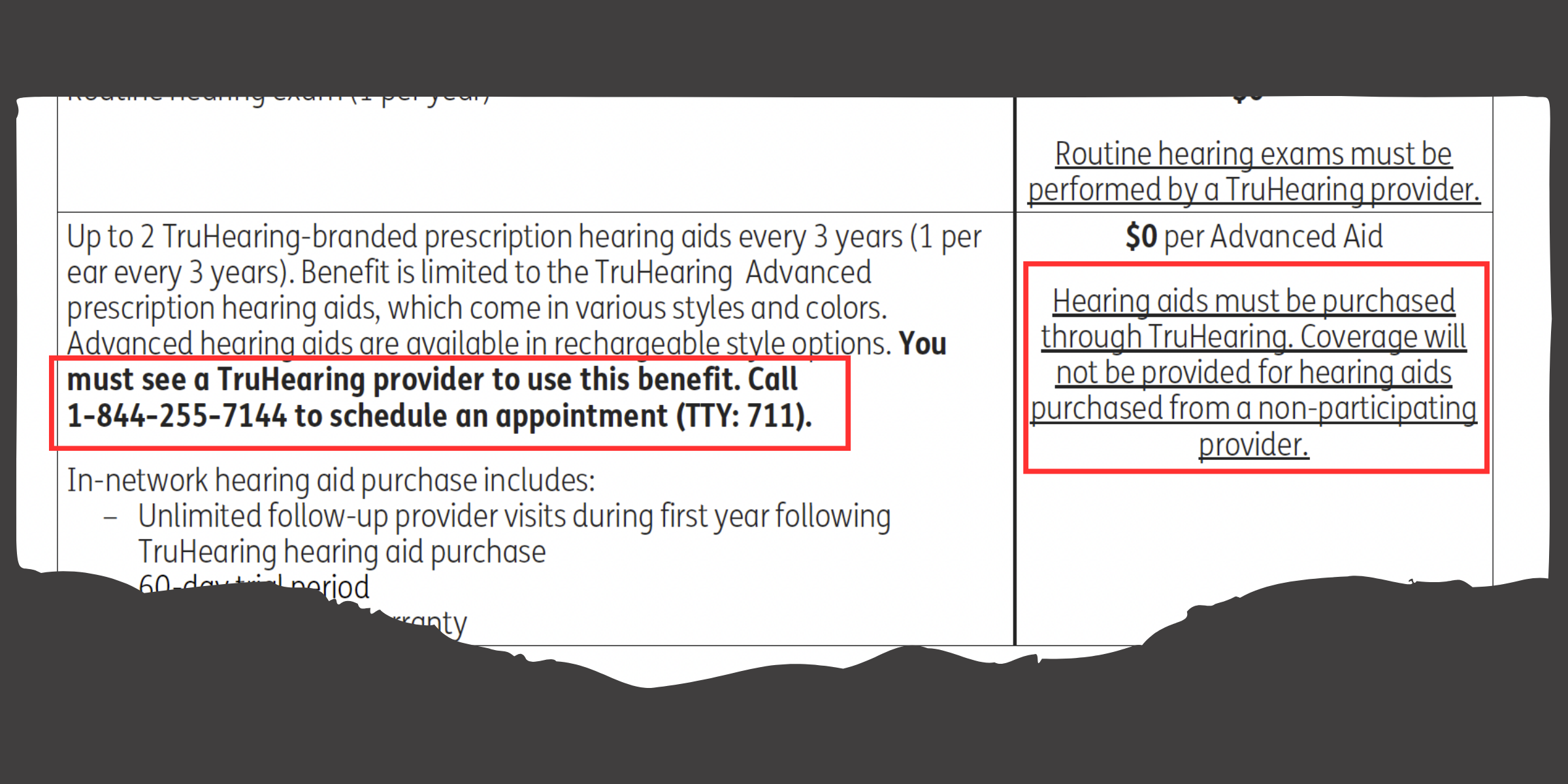
  • “You must see a TruHearing provider to use this benefit.”
  • “Hearing aids must be purchased through TruHearing.”
  • A named program with a required phone number


What this means

  • The plan has formally delegated the hearing aid benefit
  • The TPA controls:
    • Eligible providers
    • Available devices
    • Pricing and cost-share
    • Ordering, fulfillment, and follow-up


Why this matters
This approach is restrictive, but transparent. Providers and members know early that the benefit is closed and centrally administered.

For example, this Aetna Medicare Advantage PPO (H5521-432) Evidence of Coverage explicitly lists NationsHearing as the hearing aid benefit administrator.


Category 3: TPA Not Listed, but Required

(Control enforced without disclosure)

This is the most common — and most disruptive — structure in current Medicare Advantage plans.

Here, the plan does not name the administrator, yet still requires the benefit to flow through one.

Plans use different wording, but the outcome is identical.

Common phrasing variations include:

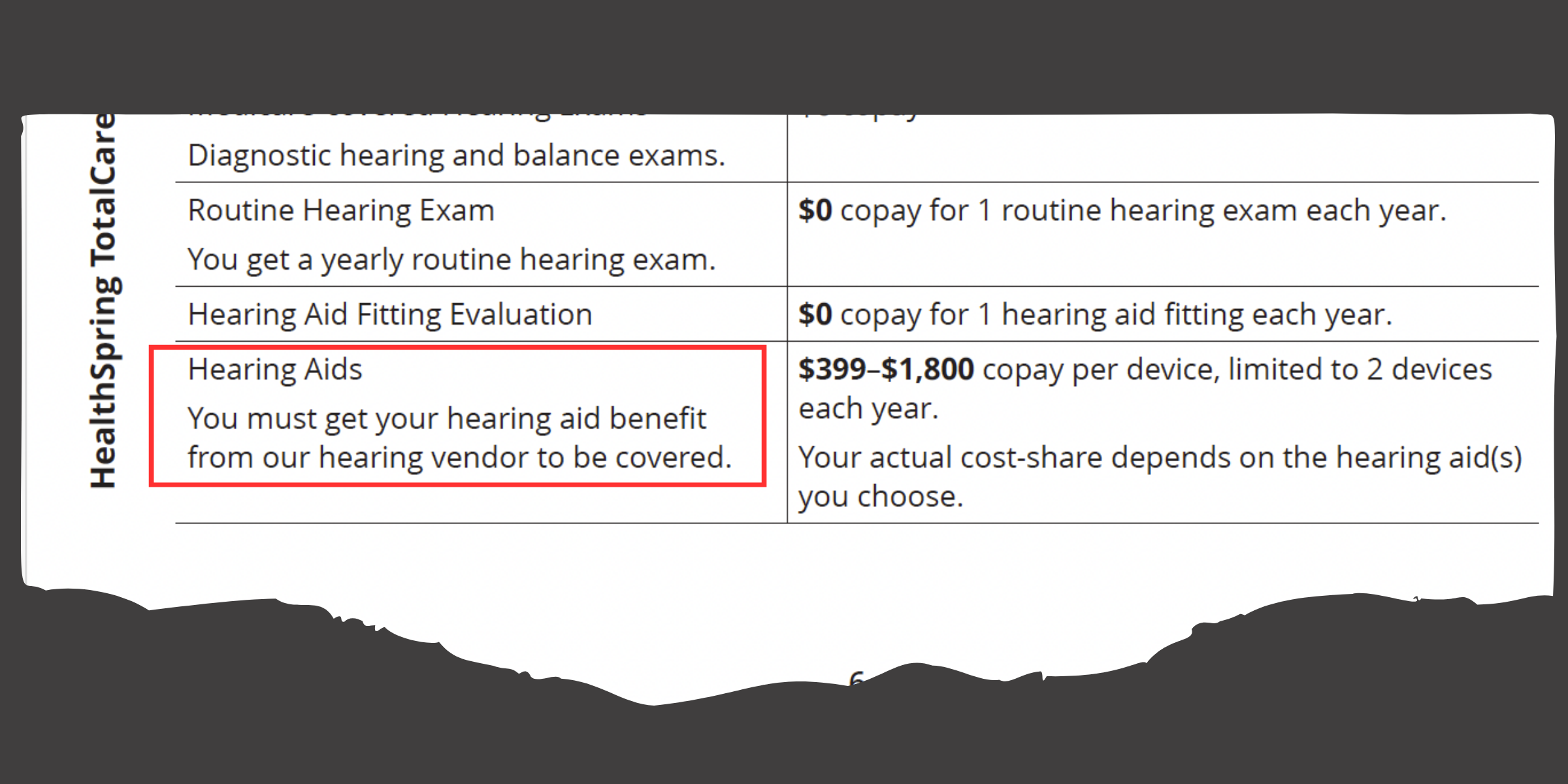
  • “You must get your hearing aid benefit from our hearing vendor to be covered.”
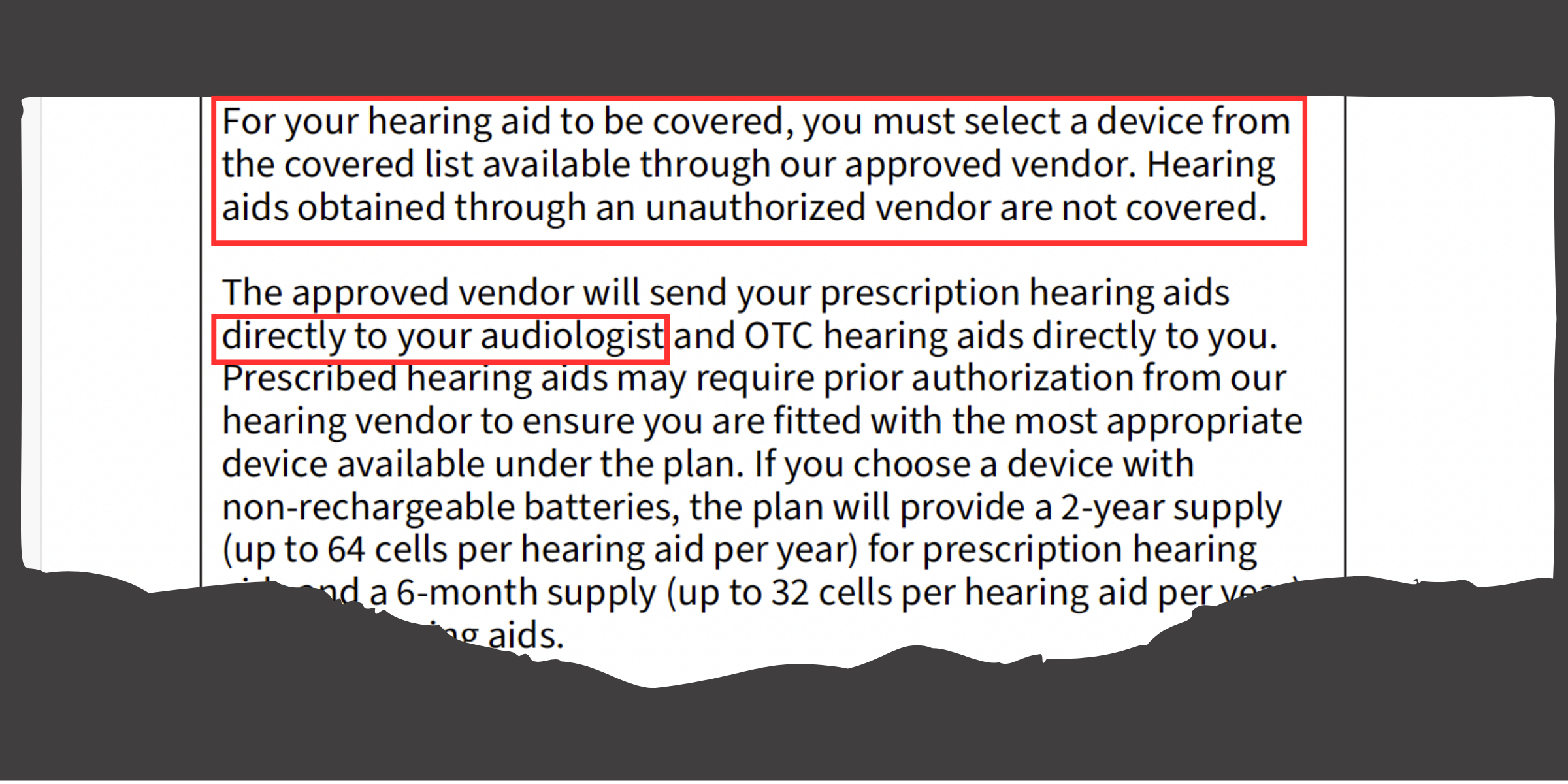
  • “Devices must be selected from the covered list available through our approved vendor.”
  • “Hearing aids obtained through an unauthorized vendor are not covered.”

Three Ways to Route a Patient to TruHearing

In the attached examples, all three variations route the benefit through TruHearing, despite appearing different on the page.

Operational reality

  • The benefit is still closed-loop
  • Provider choice is constrained
  • Device selection is controlled
  • The administrator is revealed only after engagement begins


The difference is not whether a TPA exists.
The difference is when the reader is allowed to discover it.

must get your hearing aid from our approved vendor example
The benefit appears generic, but coverage is contingent on using the plan’s unnamed “hearing vendor.” The administrator is not disclosed, yet access is fully routed.
Hearing aid must be purchased from covered list
Device selection is restricted to an “covered” list, and hearing aids obtained elsewhere are excluded—enforcing a closed-loop benefit without naming the administrator.
evidence of coverage listing TruHearing as the TPA
The administrator is explicitly named, and both provider choice and device access are clearly routed through the TPA—making the delegation transparent.

Why the Same TPA Appears Three Different Ways

What is notable is not that TruHearing is involved. It is that the same administrator is referenced in three distinct ways:

  • As a named program
  • As an unnamed “hearing vendor”
  • As an implied authority through “approved” and “unauthorized” language

The benefit outcome does not change. Only the disclosure does.

This abstraction allows plans to:

  • Retain contractual flexibility
  • Change administrators without rewriting EOCs
  • Shift discovery downstream, after time and effort have already been invested

From a provider perspective, this is where verification breaks down — not because staff failed, but because the document withheld critical routing information.

Translating Language Into Workflow Reality

Once you recognize these categories, EOC language becomes easier to interpret.

EOC Language

What It Actually Means

“Approved vendor”

TPA control without naming the administrator

“Covered list”

Restricted formulary

“Unauthorized vendor not covered”

Closed-loop benefit

“Must contact hearing vendor”

Mandatory routing step

“Routine hearing exam”

Often vendor-controlled access, not a medical visit

These phrases are not descriptive.
They are instructions.

Closing Perspective

There are not dozens of hearing aid benefit designs in Medicare Advantage.
There are three — and two of them involve delegated control.

In 2026, the most important skill is not memorizing benefit amounts.
It is learning to distinguish access from appearance, and disclosure from control.

Once you do, the surprises stop — even when the language keeps changing.

overwhelmed female looking at a blank computer screen to configure oms setup for Audiology clinic

Can Audiology OMS Setup Eliminate TPAs?

Is your Audiology Office Management System (OMS) holding your practice back? The right setup can transform data into actionable insights, empowering strategic decisions that enhance patient care and protect revenue. A well-structured OMS can uncover opportunities, streamline operations, and improve efficiency. Don’t let a generic setup dictate your clinic’s future. Learn to build an OMS that aligns with your goals, ensuring success in a competitive landscape.

Read More »