




The Illusion of Choice: Manufacturer-Owned TPAs

Part 2: The Illusion of Choice: Manufacturer-Owned TPAs

This isn’t just a catchy phrase—it’s the reality many clinics and patients face under Medicare Advantage.

Third-party administrators (TPAs) were intended to streamline hearing aid benefits, but today their role extends far beyond administration. By controlling formularies, setting patient pricing, and even owning the private-label devices they promote, TPAs shape outcomes long before a patient walks through your door.

The question is: do patients really have a choice, or has it already been decided for them?


To understand how TPAs have shifted from neutral administrators to profit centers, let’s look at:

  • who owns them
  • how that ownership shapes both benefits and patient choice

WS Audiology, for example, not only manufactures Widex and Signia but also owns TruHearing, HearUSA, and Hearing Care Solutions—three of the largest TPAs in the Medicare Advantage market.


According to WSA’s 2023/24 annual report, its “managed care” segment, which includes these subsidiaries, is a core growth driver, helping push Americas revenue to over €1.3 billion.


This vertical integration means federal Medicare dollars flow from CMS to insurers, then directly into manufacturer-owned TPAs, and finally back to the manufacturer’s own devices—capturing profit at every step. What looks like “choice” to patients is in fact a closed loop where the manufacturer sets the rules of access.


Manufacturer-Owned TPAs
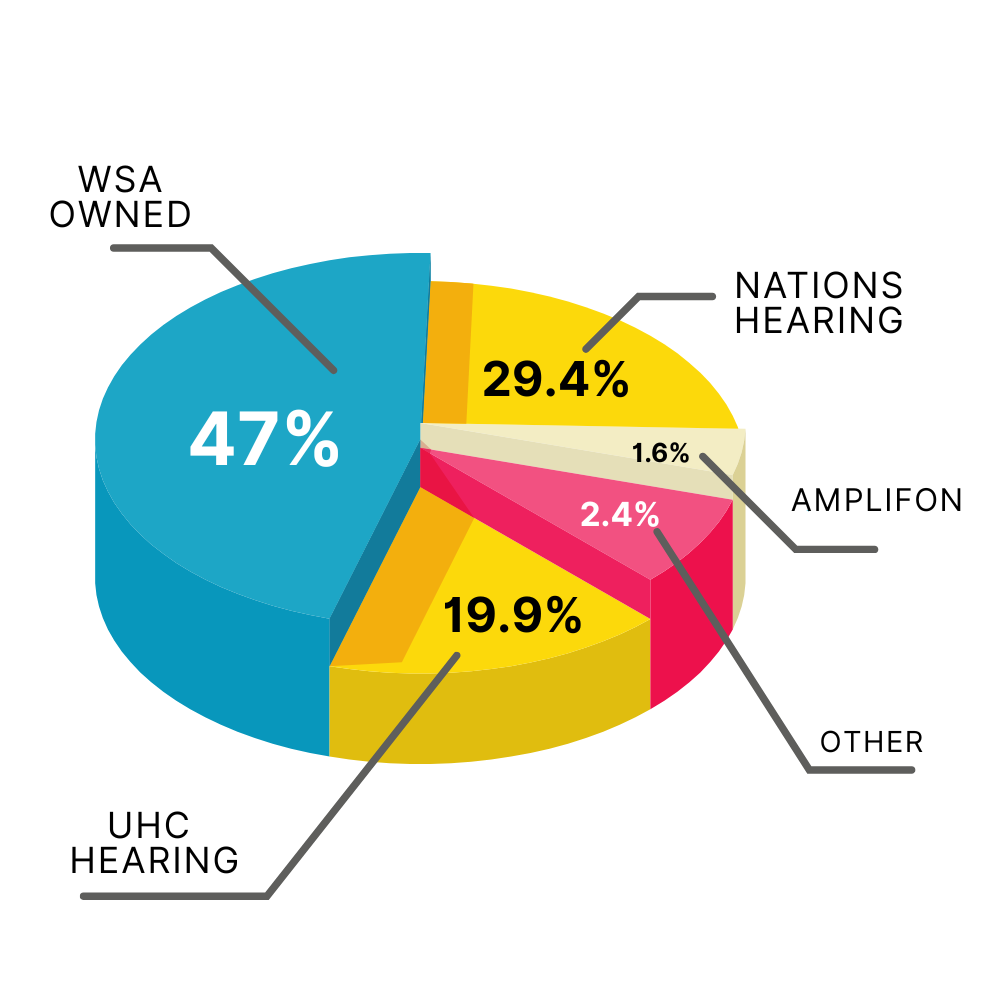
WSA-owned TPAs, including TruHearing and Hearing Care Solutions, and HearUSA control 47% of all Medicare Advantage hearing aid contracts—nearly half the market steered directly by a manufacturer.

Case Study: WSA, TruHearing, and Humana

To see how this plays out in practice, let’s take a closer look as their model shows exactly how a manufacturer-owned TPA can:

    • shape benefit design
    • steer patients toward private-label devices
    • capture federal Medicare dollars at multiple points along the way.


Let’s zoom in on Humana Medicare Advantage. Some of their plans only allow hearing benefits through TruHearing.

That’s not just a contracting decision — it’s how the money flows.

CMS →

map of the united states with CMS logo

Medicare pays Humana a risk-adjusted, capitated rate per member.

These are federal dollars, earmarked to provide comprehensive care for seniors.

Humana →

green sample humana medicare advantage card

Instead of building a hearing program themselves, Humana pays TruHearing (owned by WSA) to administer the benefit.

TruHearing→

green hearing aid with truhearing overlay

TruHearing funnels patients into its network.

Patients are offered TruHearing-branded private label devices (manufactured by WSA) at the lowest copay.

Competitor devices are also available — but priced higher, nudging patients toward WSA’s private label.

WSA

purple hearing aid with wsa logo overlay

TruHearing purchases the devices it promotes from its parent company, WSA.

This ensures WSA profits not only as the benefit manager but also as the manufacturer.

standardized costs

Revenue cycle

  • Federal Medicare dollars → Humana (capitated payment)

  • Humana → TruHearing (WSA-owned TPA contract)

  • TruHearing → WSA (its parent company) for devices

  • WSA profits twice: as the TPA administrator and as the manufacturer.

Why It Matters

    • Federal dollars meant to fund patient care are funneled through private insurers, then into vertically integrated arrangements that prioritize manufacturer profit.

    • Humana offloads risk to TruHearing, who sets the rules and formulary.

    • Patients believe they have a benefit — but their options are limited, and competitor products are deliberately priced higher.

    • Independent providers are left with capped fitting fees while billions in federal payments cycle upward.
    •  
    •  

Two Paths, Same Destination

WSA isn’t the only one playing this game. Sonova, the manufacturer of Phonak and Unitron, has aligned with UnitedHealthcare through UHC Hearing. Instead of owning the TPA directly, UHC controls the benefit manager and partners with Sonova to manufacture its exclusive private-label brand, Relate. The result is the same: patients are nudged toward the lowest copay option, while federal Medicare dollars flow through a structure designed to maximize corporate profit.


Whether the TPA is owned by the manufacturer (like WSA with TruHearing) or owned by the insurer but partnered with a manufacturer (like UHC Hearing with Sonova), the end result looks remarkably similar. Patients see a benefit that promises choice, but in reality the lowest-cost option is almost always the private-label brand tied to the TPA. Competing devices carry higher copays, and independent providers are left with capped fees and shrinking autonomy. In both models, federal Medicare dollars are captured inside vertically integrated systems that serve corporate interests first.


Whether it’s a manufacturer owning the TPA or an insurer partnering with a manufacturer through its own TPA, both models funnel federal Medicare dollars into private-label pipelines—leaving patients with the illusion of choice and providers with shrinking margins.


Medicare "disadvantage"

When federal dollars, insurers, and manufacturer-owned TPAs decide the rules, the illusion of choice becomes the reality your patients live with—and the reality your clinic has to navigate.

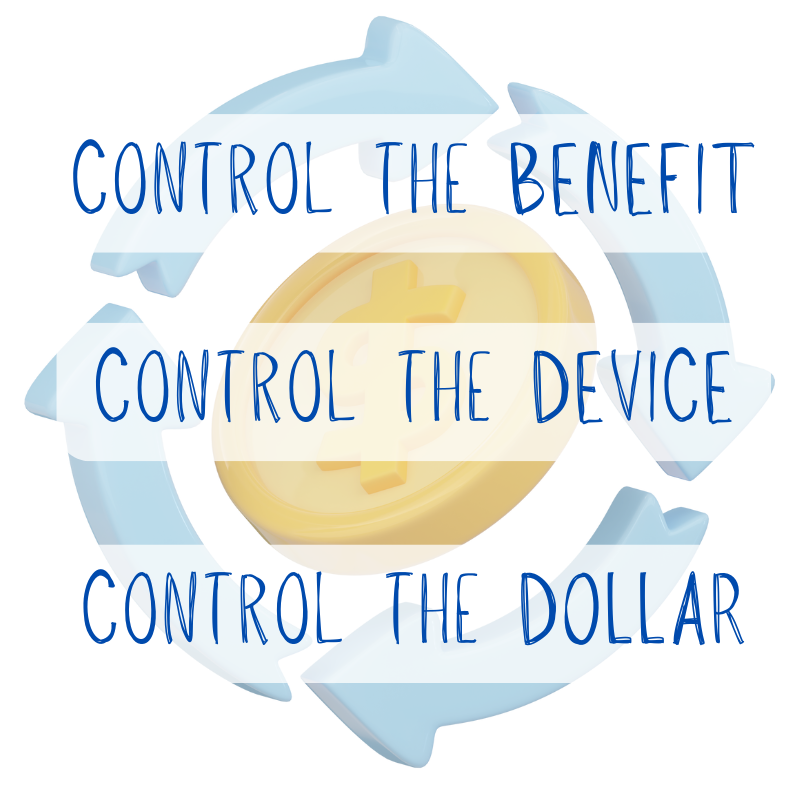
No matter which path you trace, the pattern is clear: control the benefit, control the device, control the dollar. And in this system, the promise of patient choice is little more than a carefully constructed illusion.

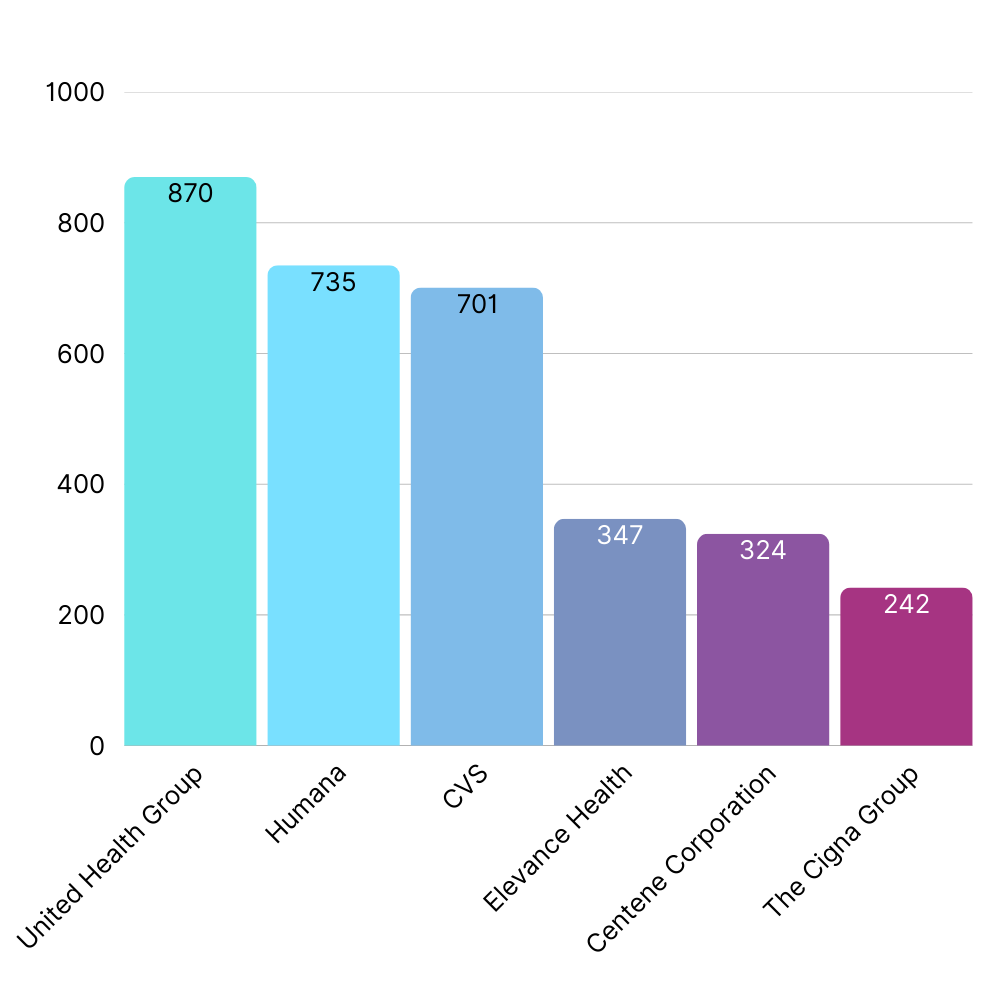
The illusion of choice isn’t just felt at the patient or clinic level—it starts at the contract level. A small handful of insurers dominate Medicare Advantage, and when you see who controls those contracts, the picture becomes even clearer. The concentration of power at the top funnels millions of federal dollars into just a few benefit pipelines.

42% of CMS Medicare Advantage contracts are held by three groups.

  • United Health Group holds 17%
  • Humana holds 14%
  • CVS holds 13%


The largest, United Health Group, owns United Healthcare Hearing, so guess which TPA those beneficiaries’ hearing aid benefits are going to be “managed” by?

Number of CMS Medicare Advantage Contracts Held by Commercial Insurers

Bar graph representing the commercial insurers hold of medicare advantage contracts
control the benefit, control the device, control the dollar

In the end, manufacturer-owned TPAs like TruHearing and insurer-owned TPAs like UHC Hearing may look different on paper, but they operate from the same playbook: control the benefit, control the device, control the dollar.

Federal Medicare dollars, premiums, and deductibles fuel a system where the appearance of choice masks a carefully constructed reality. For patients, that “free” hearing aid comes at a cost already paid through taxes and premiums. For providers, the cost is shrinking autonomy and capped reimbursement.

📌  What’s next in the series


In Part 3, our next post, we’ll follow the money one step further—into the retail clinics themselves. When manufacturers not only own the benefit manager but also the clinic where the hearing aids are fit and sold, the loop tightens even further. We’ll explore how these vertically integrated retail chains reshape patient access and compete directly with independent practices under the banner of “choice.”

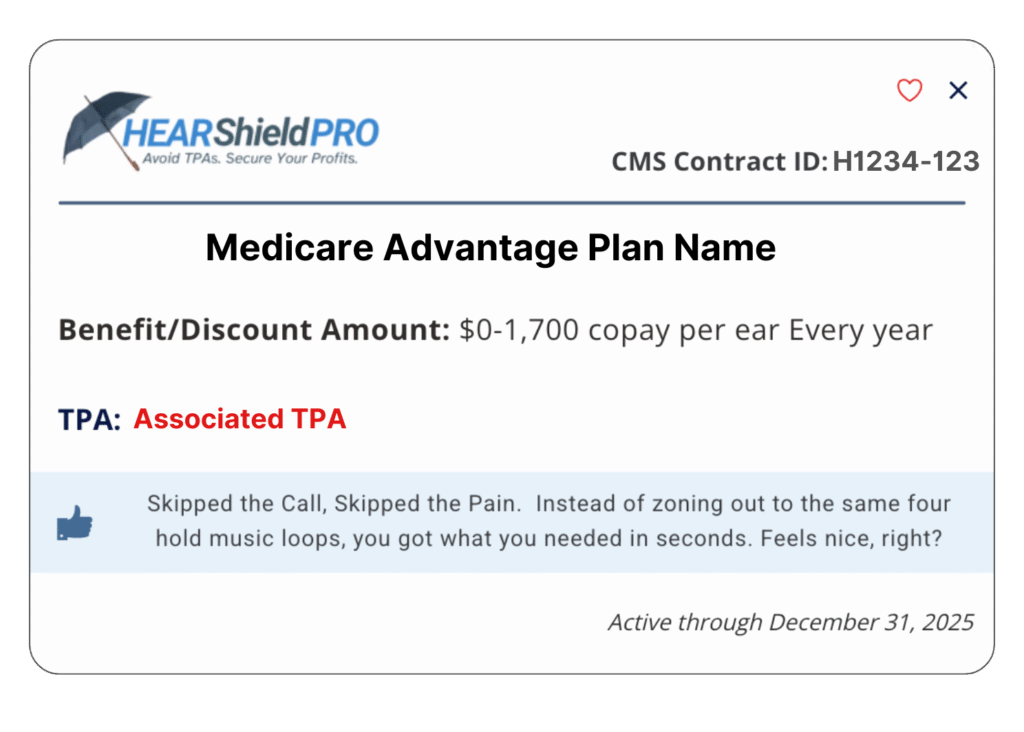
Medicare Advantage Plan with TPA Benefits. See TPA, amount, and frequency.

Check out how Hear Shield PRO helps you take back control of your practice!

With Hear Shield Pro, you’ll know upfront whether a plan requires TPA involvement — and can safeguard your revenue before scheduling or ordering.

Begin your free trial today and protect your clinic.

overwhelmed female looking at a blank computer screen to configure oms setup for Audiology clinic

Can Audiology OMS Setup Eliminate TPAs?

Is your Audiology Office Management System (OMS) holding your practice back? The right setup can transform data into actionable insights, empowering strategic decisions that enhance patient care and protect revenue. A well-structured OMS can uncover opportunities, streamline operations, and improve efficiency. Don’t let a generic setup dictate your clinic’s future. Learn to build an OMS that aligns with your goals, ensuring success in a competitive landscape.

Read More »